Last reviewed: 20th July 2026
An injured person can claim compensation after an e-bike accident, although a legally compliant e-bike is treated like an ordinary pedal cycle and does not carry compulsory motor insurance. This applies to personal injury claims arising in England and Wales. Depending on the circumstances, a claim may be brought against the rider, an insurer, a hire operator, a manufacturer, an employer, a highway authority or, in certain cases, the Motor Insurers’ Bureau. The absence of compulsory insurance does not by itself prevent a claim, but it can make identifying a solvent, traceable defendant more difficult than in a typical road traffic accident.
Key Points
- A legally compliant e-bike (an EAPC) does not require registration, tax, a driving licence or compulsory motor insurance, which can leave an injured pedestrian without an obvious insurer to pursue.
- Compensation may potentially be claimed against the rider, a hire operator, a manufacturer, an employer, a highway authority or the Motor Insurers’ Bureau, depending on the circumstances of the accident.
- An e-bike that exceeds the legal power or speed limits for an EAPC may be treated as a motor vehicle, which can change the available routes to compensation, including possible Motor Insurers’ Bureau involvement.
- Evidence such as CCTV footage, witness details, hire records and photographs of the bike should be gathered promptly, since this evidence can disappear quickly after the accident.
- Court proceedings for a personal injury claim in England and Wales must ordinarily be issued within three years of the accident, with different rules applying to children and those lacking litigation capacity.
E-bikes are now a common sight across towns and cities in England and Wales. Although they provide a convenient and environmentally friendly way to travel, collisions involving e-bikes can cause serious and sometimes life-changing injuries to pedestrians, cyclists and other road users.
Claiming compensation after an e-bike accident is not always straightforward. A legally compliant e-bike is generally treated in the same way as an ordinary pedal cycle. Unlike cars, vans and motorcycles, it does not have to be covered by compulsory motor insurance. This can leave an injured person without an obvious insurer to pursue, particularly where the rider cannot be identified or has no personal insurance. A specialist Cycling, Pedestrian, and Motorbike Accident Solicitor can help you bring a compensation claim.
However, the absence of compulsory insurance does not necessarily mean that compensation cannot be claimed. Depending on the circumstances, there may be a claim against the rider, an insurer, a hire operator, a manufacturer, an employer, a highway authority or, in certain cases, the Motor Insurers’ Bureau.
Why are e-bike injury claims complicated?
Following an accident involving a car, van or motorcycle, a claim will usually be made against the driver’s motor insurer. If the driver is uninsured or cannot be traced, the injured person may be able to apply to the Motor Insurers’ Bureau.
The position is different where the accident involves a legally compliant electrically assisted pedal cycle, commonly known as an EAPC. An EAPC does not need to be registered, taxed or covered by motor insurance, and the rider does not need a driving licence.
As a result, an injured pedestrian may need to bring a negligence claim directly against the rider. That can create practical difficulties where the rider left the scene, cannot be identified, has no relevant insurance or does not have the financial means to pay compensation.
Additional issues can arise where the bike was hired through a dockless rental scheme, accessed using another person’s account, ridden by someone under the permitted age or modified so that it no longer complied with the legal requirements for an EAPC.
What is a legally compliant e-bike?
For an e-bike to be treated as an EAPC, it must have pedals that can be used to propel it. Its electric motor must have a maximum continuous rated output of no more than 250 watts, and the electrical assistance must cut out when the bike reaches 15.5 mph.
A person must also be at least 14 years old to ride an EAPC on a public road.
Provided these requirements are met, the bike can generally be used in the same places as an ordinary pedal cycle without registration, vehicle tax, compulsory motor insurance or a driving licence.
The fact that a compliant e-bike does not require insurance does not excuse careless riding. E-bike riders still owe a duty to take reasonable care for the safety of pedestrians and other road users.
What if my e-bike breaks the legal rules?
Some e-bikes are modified or manufactured so that the motor continues to provide assistance above the permitted speed, the motor output exceeds the legal limit or the bike can be propelled by the motor in circumstances falling outside the EAPC rules or any applicable approval regime.
A bike falling outside the EAPC requirements may be treated as a motor vehicle, such as a moped or motorcycle. Registration, an appropriate driving licence, insurance, a helmet and other legal requirements may then apply.
Where a non-compliant e-bike is uninsured or its rider cannot be traced, the Motor Insurers’ Bureau may potentially become relevant. However, the involvement of an e-bike does not automatically create a right to compensation from the MIB.
Eligibility will depend on the bike’s legal classification, the circumstances of the accident and the terms of the relevant MIB agreement. MIB claims are also subject to procedural requirements, evidence requirements and time limits. Prompt reporting and cooperation with any investigation can therefore be important.
Determining whether a particular bike remained a legally compliant EAPC may require evidence about its model, motor, software, speed capability and any modifications made before the accident.
Can I claim against the e-bike rider?
An e-bike rider may be liable where their careless or dangerous riding caused the accident.
To succeed in a negligence claim, an injured person will generally need to establish that the rider owed them a duty of care, that the rider fell below the standard reasonably expected of a competent cyclist and that this caused the injury and resulting losses.
Examples of potentially negligent riding may include travelling too fast for the conditions, failing to keep a proper lookout, ignoring traffic lights or road signs, riding dangerously on a pavement or in a pedestrian area, using a mobile telephone while riding, failing to give way or losing control through carelessness.
The existence of a valid legal claim does not always mean that compensation can easily be recovered. Where the rider has no suitable insurance and limited personal assets, enforcement may be difficult. Investigating every realistic source of liability and insurance matters more than focusing solely on the individual rider.
What if the rider was a child?
A child may potentially be held responsible for causing an accident, although their conduct is assessed against the standard reasonably expected of a child of a similar age rather than that expected of an adult.
Parents are not automatically liable merely because their child caused the collision. There would usually need to be a separate legal basis for pursuing a parent, such as evidence that the parent’s own negligent act or omission contributed to what happened.
A child under the age of 14 should not ride an EAPC on a public road. Where an underage child was using a hire bike, it may be necessary to investigate how they gained access to it, whether another person’s account was used and whether any insurance was attached to the ride.
The fact that the rider breached the hire operator’s terms may affect whether an insurance policy responds, but it does not by itself establish that the operator is legally liable for the accident.
Even where a child is legally responsible, the practical recovery of compensation may depend on whether any household, school, hire-scheme or other insurance applies.
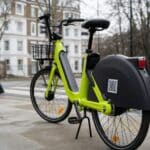
Can I claim against Lime or another hire operator?
A hire operator is not automatically liable merely because it owns the e-bike involved in an accident.
A direct claim against an operator would generally require evidence that an act or omission by the operator contributed to the collision. This could include a defective bike, inadequate inspection or maintenance, a known mechanical problem or a failure in the operator’s systems.
A hire operator’s liability is separate from the question of insurance. Some operators arrange third-party liability insurance for authorised riders, but whether that insurance applies will depend on the policy wording and the circumstances of the ride.
Relevant considerations may include whether the ride was authorised, whether the correct account holder was riding, whether the bike had been reported stolen and whether the terms of use were being followed. Insurance arrangements may change, so the policy wording in force at the date of the accident must be checked.
A solicitor can take steps to seek relevant information, including rental records, account information, bike identification details, maintenance history and insurance documents. However, an operator may not be able or willing to disclose personal data simply because it has been requested.
Depending on the circumstances, disclosure may require consent, insurer involvement, police enquiries, formal pre-action correspondence, a court order or another lawful basis.
For more information on whether you can claim for compensation if you have been hit by a Lime bike, please click here.
For more information on whether pedestrians can claim compensation if hit by an e-bike, click here.
Could another person or organisation be responsible?
If your accident was caused by any of the below circumstances, other parties may be liable in negligence:
Defective e-bikes
Where a brake, wheel, frame, handlebar, battery or another component failed, it may be appropriate to investigate a claim against the producer, supplier, hire company or another party responsible for the bike.
A claim may arise under product liability law, negligence or contract, depending on the circumstances. In some cases, product liability legislation may impose liability for a defective product without the injured person having to prove negligence. Establishing that the product was defective and that the defect caused the injury and resulting loss remains necessary.
The bike should be preserved wherever possible. Repairs, disposal or continued use may alter important evidence. Expert engineering evidence may be required to determine why the component failed.
Dangerous roads or cycle routes
Where a dangerous defect in a road or cycle route contributed to the accident, it may be appropriate to investigate whether the relevant highway authority complied with its legal duties.
A council is not automatically liable whenever a pothole or surface defect is involved. Liability will depend on the nature of the defect, whether the authority was legally responsible for maintaining the location and whether it operated an appropriate inspection and maintenance system.
A highway authority may have a statutory defence if it can demonstrate that it took such care as was reasonably required to ensure that the highway was not dangerous.
Employers and delivery companies
Where the rider was working at the time of the collision, for example as a delivery rider, there may be circumstances in which an employer or another organisation is legally responsible.
The employer’s responsibility will depend on the nature of the working relationship, what the rider was doing when the accident occurred and whether the conduct took place in the course of their work.
What evidence should I obtain after an e-bike accident?
Evidence can disappear quickly, particularly where the rider leaves the scene or nearby CCTV is routinely deleted.
Where it is safe to do so, take photographs or videos of the bike, the rider, the scene, the road layout, any damage and your visible injuries. If the bike belongs to a hire scheme, photograph its serial number, QR code or other identifying marks.
Record the precise time and location of the accident and obtain the names and contact details of any witnesses.
The incident should be reported to the police where the rider left the scene, serious injury was caused, a non-compliant e-bike or another offence may be involved, or police assistance is required to identify the rider.
Nearby shops, homes, offices, buses and public buildings may hold CCTV footage. Urgent requests should be made for the footage to be preserved before it is overwritten. Hire records, account details, location data and maintenance information may also be relevant.
Seek appropriate medical attention and ensure that your symptoms and injuries are recorded. Keep copies of medical documents, receipts, travel costs, wage information and any correspondence with the rider, police, hire operator or insurer.
Evidence should only be gathered lawfully and safely. An injured person should not place themselves at risk, confront a rider aggressively or attempt to access private CCTV or personal information without permission.
What compensation may be claimed?
Compensation is intended, as far as money can, to place an injured person in the position they would have been in had the accident not occurred.
A claim may include compensation for pain, suffering and loss of amenity. This reflects the injury itself and its effect on the person’s daily life, independence and enjoyment of activities.
A claim may also include compensation for past and future financial losses, such as loss of earnings, private treatment and rehabilitation, medication, care provided professionally or by relatives, travel costs, specialist equipment, home adaptations, vehicle adaptations, damaged belongings and future support needs.
The amount of compensation will depend on the severity of the injury, the likely prognosis, its effect on work and independence, and the evidence available.
In serious cases involving spinal, orthopaedic or brain injuries, independent medical experts may be instructed to assess the long-term consequences and recommend suitable treatment, rehabilitation and support.
How long do I have to make an e-bike personal injury compensation claim?
In England and Wales, court proceedings for a personal injury claim will ordinarily need to be issued within three years of the accident, under section 11 of the Limitation Act 1980.
In most accident cases, time begins to run on the date of the collision. In some circumstances, the period may run from a later date of knowledge, but these rules are technical and should not be assumed to extend the deadline without legal advice.
Different rules apply to children. Where the injured person was under 18 at the time of the accident, the ordinary three-year period generally does not begin until their 18th birthday. This will usually give them until their 21st birthday to issue proceedings.
Where a person is under a qualifying legal disability because they lack capacity to conduct litigation, the limitation period may be suspended while that disability continues.
If proceedings are issued after the applicable deadline, the defendant may argue that the claim is statute-barred. The court has a discretion to allow some late personal injury claims to continue where it considers it equitable to do so, but that discretion is uncertain and should never be relied upon.
Early legal advice is particularly important in e-bike cases because identifying the rider, establishing the classification of the bike and locating any available insurance may take time.
Can I claim if the rider cannot be found?
Possibly, but the available route will depend heavily on the type of bike involved.
If the bike was a legally compliant EAPC, the Motor Insurers’ Bureau may not provide the same protection that would ordinarily be available following a collision with an untraced motor vehicle.
Identifying the rider may still be possible through CCTV, witness evidence, police enquiries, hire records or operator data.
If the bike was not legally compliant and was therefore legally treated as a motor vehicle, an MIB claim may potentially be considered. A detailed assessment of the bike’s classification and the relevant MIB agreement will be required.
Where a hire bike was involved, the operator should be contacted promptly and asked to preserve relevant records.
Can an e-bike injury compensation claim be funded on a no win, no fee basis?
Many personal injury claims are funded through a conditional fee agreement, commonly known as a no-win, no-fee agreement.
Whether this type of funding is available will depend on the prospects of success, the evidence, whether a suitable defendant can be identified and the likelihood that any compensation award can be recovered.
The phrase no win, no fee does not mean that every possible expense or deduction is irrelevant in every circumstance.
Before entering into an agreement, the solicitor should explain what happens if the claim succeeds, whether a success fee may be deducted from compensation, whether after-the-event insurance is recommended, how expenses and expert fees are dealt with, and whether costs could become payable if the client ends the agreement, fails to cooperate or provides misleading information.
The likely deductions, funding alternatives and key terms should be explained clearly before the agreement is signed.
Does the law protect e-bike accident victims?
The current framework can leave serious gaps, particularly where a pedestrian is injured by an unidentified rider using a compliant and uninsured e-bike.
Allowing compliant e-bikes to be used without compulsory motor insurance supports accessible and environmentally friendly transport. However, the absence of compulsory insurance can leave a seriously injured person without an obvious insurer to pursue.
The expansion of dockless hire schemes has raised further concerns about rider identification, underage access, insurance and the responsibilities of operators.
Any future reform will need to balance the benefits of e-bike travel with proper protection for pedestrians and other road users who suffer injury through no fault of their own.
Speak to an e-bike injury solicitor
E-bike accident claims can involve complex questions about negligence, insurance, vehicle classification, evidence and the identity of the person or organisation responsible.
Law Lane Solicitors can investigate how the accident occurred, take steps to preserve important evidence, seek to identify the bike and rider where possible, and consider every realistic route to compensation.
Contact our personal injury team for an initial assessment. We will explain your legal and funding options clearly and advise whether your case may be suitable for a conditional fee agreement.
For more information on whether pedestrians can claim compensation if hit by an e-bike, click here.
For more information on whether you can claim for compensation if you have been hit by a Lime bike, please click here.
This article concerns personal injury claims arising in England and Wales. This general information is not a substitute for legal advice based on the individual facts of a case.
Last reviewed: July 2026
Author – Hakim Zadi
Hakim Zadi is the Assistant Manager of the Clinical Negligence Team and a Clinical Negligence Paralegal at Law Lane Solicitors. She acts for patients and families in clinical negligence claims arising from delayed diagnosis, surgical errors, birth injury, cauda equina syndrome, and GP and hospital negligence across England and Wales.
Hakim is a member of APIL and contributes to clinical negligence commentary on patient safety, birth injury, and access to justice for vulnerable clients. She speaks English, Sindhi, and Urdu.
Frequently Asked Questions
Is it illegal for an e-bike rider to ride on the pavement?
Yes, riding a cycle, including a legally compliant e-bike, on a pavement is an offence in England and Wales. Section 72 of the Highway Act 1835 prohibits wilfully riding on a footpath set apart for pedestrians, and this provision continues to apply to cycles today. Pavement riding that causes a collision can also support a claim that the rider fell below the standard of a careful cyclist.
Can my compensation be reduced if I contributed to the e-bike accident?
Yes, compensation can be reduced where the injured person’s own conduct contributed to the accident or its severity. Under section 1 of the Law Reform (Contributory Negligence) Act 1945, damages are reduced to the extent the court considers just and equitable having regard to the claimant’s share of responsibility. A defendant must prove the claimant failed to take reasonable care and that this contributed to the injury.
How long do I have to bring a defective e-bike claim under product liability law?
A personal injury claim under product liability legislation is generally subject to the same three year limitation period as other personal injury claims, running from the date of injury or the date of knowledge. Section 11A of the Limitation Act 1980 also imposes an absolute ten year longstop on claims brought under the Consumer Protection Act 1987, running from when the product was put into circulation, and the court has no discretion to extend this longstop.
What must be proved to bring a claim under the Consumer Protection Act 1987?
A claim under the Consumer Protection Act 1987 requires the injured person to show that the product was defective and that the defect caused the injury, without needing to prove that the manufacturer was negligent. A product is defective where its safety is not such as persons generally are entitled to expect, and liability under the Act can fall on the producer, an own-branding party or an importer.
What defence can a council raise if a pothole on a cycle route caused my accident?
A highway authority can raise the statutory defence in section 58 of the Highways Act 1980 if it can show it took such care as was reasonably required, in all the circumstances, to ensure the highway was not dangerous. Relevant factors include the character of the road, the standard of maintenance reasonably expected, and whether the authority knew or should have known of the defect through a reasonable system of inspection.