Last reviewed: 31st July 2026
You can claim compensation if a Lime bike injured you in England and Wales, but the route to compensation depends on whether the hire was active at the time, who was riding the bike, and what evidence was preserved at the scene. Lime provides limited third-party liability cover, yet the company’s terms of use contain conditions that may allow the insurer to decline a claim. A personal injury solicitor can identify the right defendant and build the strongest possible case.
Key Points
- Lime provides third-party liability cover for e-bike users in England and Wales, but cover may be refused where the rider breached the terms of use, for example by being underage or riding a bike reported as stolen.
- Where Lime declines liability, the injured person can pursue the individual rider directly for negligence, though a rider with no assets and no insurance may make recovery difficult.
- If the e-bike exceeded the legal limits set by the Electrically Assisted Pedal Cycles Regulations 1983, the bike may be reclassified as a motor vehicle, opening a route to the Motor Insurers’ Bureau.
- Evidence gathered at the scene, particularly the bike’s QR code, serial number, and CCTV footage, is central to linking the physical bike to an active hire and countering a stolen-bike defence.
- Personal injury claims must generally be issued within three years of the accident under the Limitation Act 1980, though children have until their 21st birthday.
On 4th August 2023, a 10-year-old boy rode a Lime e-bike into Jane Ouartsi as she crossed St Giles Square in London, fracturing her femur, collarbone, and two vertebrae. This article forms part of our wider guide to E-bike Accidents and Personal Injury, and it illustrates the two obstacles most injured pedestrians face: persuading Lime to accept liability, and identifying a defendant who can actually pay.
Lime told Jane’s family that the bike had been stolen and that no active ride could be traced, so no compensation was paid. The BBC and the Independent reported the case in June 2026. Lime’s hire scheme in England and Wales operates without the compulsory motor insurance that would otherwise guarantee a payout to an injured third party. Understanding how Lime’s liability terms work, and what alternatives exist when those terms are invoked, is the starting point for any Lime bike accident compensation claim.
Does Lime’s insurance cover my injuries?
Lime provides third-party liability cover for e-bike users in the UK that can respond to claims from injured pedestrians where a Lime rider caused the accident through negligence during an active, authorised hire. The cover applies only where the rider was at least 18 years old, was using the bike under a live rental registered to the account holder, and was complying with traffic law. A rider who falls outside those conditions takes the hire outside the cover.
Lime’s terms of use require the registered account holder to be the person physically riding. A child who scans a QR code on a borrowed phone falls outside an authorised hire. Lime’s stolen-bike defence goes further: where the company records no active ride on the bike’s GPS at the moment of impact, the insurer treats the incident as entirely outside the policy. The defence is contested, and a solicitor can request disclosure of Lime’s GPS and app records through the court process to challenge it.
Reporting the accident to Lime as quickly as possible, and preserving every piece of evidence from the scene, gives the strongest basis for establishing that a hire was live at the time. CCTV footage is typically overwritten within 28 days. A personal injury solicitor may be able to apply for an urgent preservation order where appropriate.
Who else can you claim against?
If Lime declines liability, three further defendants may be available depending on the circumstances of the accident:
- the individual rider,
- a local authority responsible for the location, and
- the Motor Insurers’ Bureau where the bike was non-compliant with the Electrically Assisted Pedal Cycles Regulations 1983.
A legally compliant e-bike is classified as a pedal cycle and falls outside the compulsory insurance requirement of the Road Traffic Act 1988. A bike modified to exceed 250 watts or 15.5 mph loses that classification and becomes a motor vehicle.
Section 185(1) of the Road Traffic Act 1988 defines a ‘motor vehicle’ as ‘a mechanically propelled vehicle intended or adapted for use on roads’. A modified e-bike that exceeds the EAPC limits and is used on roads falls within that definition, making compulsory motor insurance a legal requirement for the rider. Where no insurance exists, the Motor Insurers’ Bureau Untraced Drivers Agreement 2017 may compensate injured pedestrians, provided the accident was reported to the police promptly and the bike can be shown to fall outside the EAPC classification.
What evidence do you need at the scene?
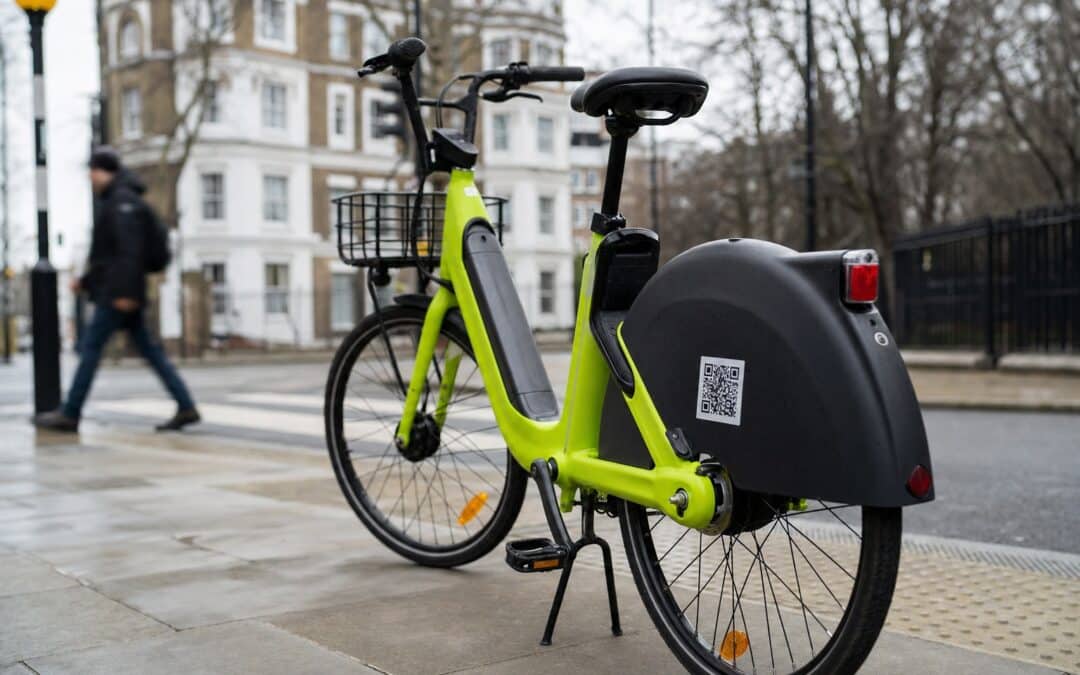
The most valuable evidence in a Lime bike claim is anything that ties the physical bike to an active hire at the moment of impact. Photographs of the QR code and serial number on the bike, taken immediately at the scene, are the most useful step a pedestrian can take. Screenshots of the Lime app, CCTV from surrounding buildings, and witness contact details all bear on whether a hire was active.
Beyond linking the bike to a hire, a successful negligence claim requires evidence of the rider’s breach of duty of care, the injuries sustained, and the financial losses flowing from the accident. Medical records from the date of the accident form the backbone of the damages calculation.
Gathering strong evidence on the day is therefore the most effective step an injured pedestrian can take. However, many are too injured to be able to do this. An experienced personal injury law solicitor can gather evidence, and in my experience, witnesses genuinely want to help in these types of situations.
For more information on whether you can claim compensation if you’ve been injured by an e-bike, please click here.
For more information on whether pedestrians can claim compensation if hit by an e-bike, click here.
Talk to Law Lane Solicitors
If a Lime bike or another e-bike has left you injured, Law Lane Solicitors can assess your case and advise on the right route to compensation. Contact our personal injury team today for a free initial discussion.
Author – Hakim Zadi
Hakim Zadi is the Assistant Manager of the Clinical Negligence Team and a Clinical Negligence Paralegal at Law Lane Solicitors. She acts for patients and families in clinical negligence claims arising from delayed diagnosis, surgical errors, birth injury, cauda equina syndrome, and GP and hospital negligence across England and Wales.
Hakim is a member of APIL and contributes to clinical negligence commentary on patient safety, birth injury, and access to justice for vulnerable clients. She speaks English, Sindhi, and Urdu.
Frequently Asked Questions
Can I claim if the rider was a child?
Yes, a child rider does not remove the right to claim compensation. The minimum age to use Lime in the UK is 18, so an underage rider breaches the terms of use, which may affect whether Lime’s insurer responds. A negligence claim against the child remains open in law, though recovering money from a minor with no assets is difficult. A solicitor can assess whether Lime or another party bears responsibility for failing to prevent underage access to the bike.
What if Lime says the bike was stolen?
A stolen-bike defence is Lime’s basis for arguing that no active hire existed and that no third-party cover applies. The defence can be challenged by presenting the bike’s QR code and serial number, seeking disclosure of Lime’s GPS data, and obtaining any CCTV footage showing the bike in use before or after the accident. A solicitor can compel disclosure of app and GPS records through the court process. Where the defence cannot be substantiated, Lime’s insurer may still be required to meet the claim.
How long do I have to bring a Lime bike accident claim?
Personal injury claims in England and Wales must generally be issued within three years of the accident date under the Limitation Act 1980. Children injured before their 18th birthday have until their 21st birthday. CCTV footage disappears within days and witnesses become harder to trace over time, so instructing a solicitor promptly after the accident protects the evidence position.