Last reviewed: 31st July 2026
As a pedestrian injured by an e-bike in England and Wales, you have the right to claim compensation for your injuries and financial losses. Every e-bike rider owes a duty of care to pedestrians, and a rider who breaches that duty by cycling recklessly, too fast, or in a pedestrianised area is liable in negligence. The absence of compulsory insurance for legally compliant e-bikes affects who pays, and a personal injury solicitor can advise on the correct defendant to pursue.
Key Points
- Every e-bike rider in England and Wales owes a duty of care to pedestrians under the common law of negligence, and a breach causing injury gives the pedestrian the right to claim compensation.
- Contributory negligence under the Law Reform (Contributory Negligence) Act 1945 may reduce a pedestrian’s award where the pedestrian’s own conduct contributed to the accident, but the burden of proof rests on the defendant.
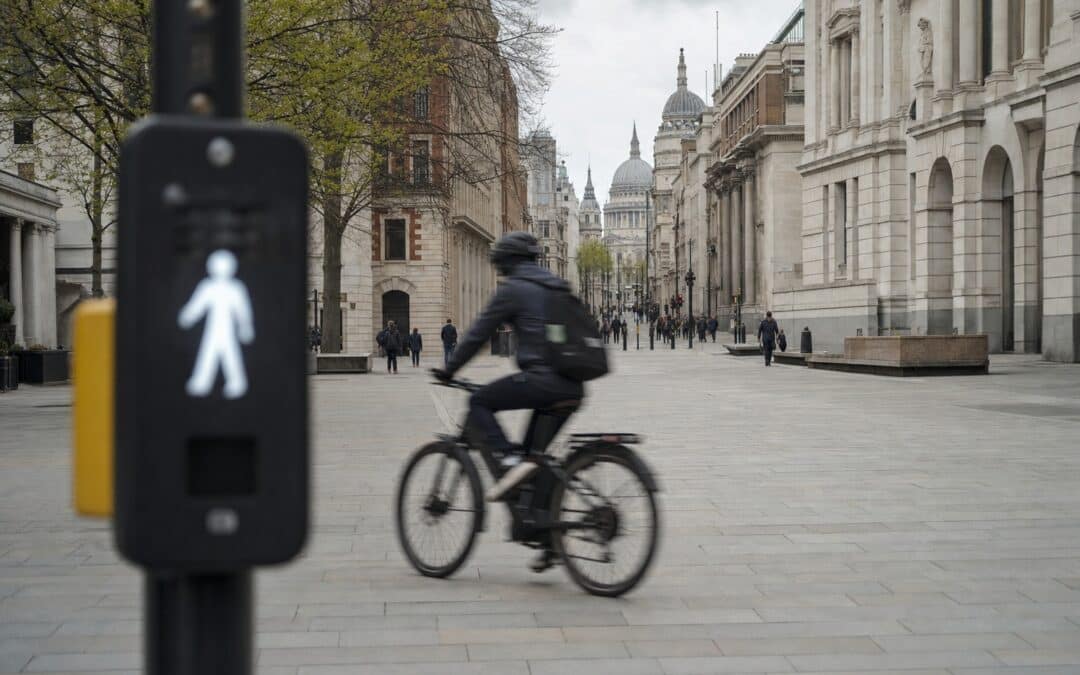
- Pedestrians injured in pedestrianised zones or on pavements hold a strong evidential position, because a cyclist’s presence in such a space may itself amount to a breach of duty.
- General damages may be awarded to compensate for pain and suffering and future lost earnings. If awarded, special damages cover all quantifiable financial losses including lost earnings and care costs.
- Claims must ordinarily be issued within three years of the accident under the Limitation Act 1980, and most personal injury solicitors act on a no-win, no-fee basis.
For pedestrians, being struck by an e-bike is a terrifying and shocking experience. I have acted for clients who have suffered catastrophic head and spinal injuries, broken bones, and psychological trauma following such accidents.
The absence of compulsory motor insurance for a legally compliant e-bike makes the compensation position more complex than in a conventional road traffic claim, but a pedestrian’s right to sue for negligence is entirely unaffected by how the bike is classified. Classification determines who can be pursued and by what route, and a solicitor can map those routes for the specific facts of each case.
This article discussing pedestrian e-bike injury compensation claims forms part of our wider guide to E-bike Accidents and Personal Injury.
What duty of care does an e-bike rider owe to pedestrians?
Every e-bike rider in England and Wales owes a duty of care to pedestrians who might foreseeably be affected by their conduct. The duty requires the rider to meet the standard of a reasonable, competent cyclist: maintaining a safe speed, watching for pedestrians, and following applicable road rules. A rider who falls below that standard and causes injury may be liable in negligence, provided the claimant can prove that the rider breached their duty of care and that breach caused their injury.
A cyclist riding on a pavement commits an offence under section 72 of the Highways Act 1835, and a cyclist entering a pedestrianised zone contrary to a traffic regulation order may be in breach of that order, depending on the restrictions that apply to that specific location. Either breach constitutes direct evidence that the rider fell below the standard of a reasonable cyclist. Courts also assess speed relative to conditions: under the Electrically Assisted Pedal Cycles Regulations 1983, a compliant e-bike assists up to 15.5 mph, and a speed that is safe on an open road may be unreasonable near a school gate or at a busy pedestrian crossing.
Witness statements, CCTV footage, and GPS data held by a hire operator can all establish speed and position at the moment of impact. Where appropriate, a personal injury solicitor may be able to apply for an urgent preservation order before footage is overwritten, which typically happens within 28 days of the incident.
What if I was partly at fault for the e-bike accident?
A defendant can argue contributory negligence under the Law Reform (Contributory Negligence) Act 1945 where the pedestrian’s own conduct contributed to the accident. A successful argument reduces the award by the percentage of fault attributed to the pedestrian; the claim itself survives. The burden of proving contributory negligence rests on the defendant. A pedestrian who stepped into the road without looking, or who was using a phone at the time, may face a proportionate reduction.
As section 1(1) of the Law Reform (Contributory Negligence) Act 1945 provides:
”where any person suffers damage as the result partly of his own fault and partly of the fault of any other person or persons, a claim in respect of that damage shall not be defeated by reason of the fault of the person suffering the damage, but the damages recoverable in respect thereof shall be reduced to such extent as the court thinks just and equitable having regard to the claimant’s share in the responsibility for the damage.”
Pedestrians in pedestrianised zones or on pavements may still be awarded significant damages even if they were partially at fault for the collision, because the rider had no lawful right to be in that space at all.
The physical harm an e-bike causes to a pedestrian far exceeds the harm the pedestrian’s conduct can cause to the rider, and courts factor that disparity into the causative potency assessment. In my experience, insurers often overstate contributory negligence to reduce payouts, and I rigorously challenge any proposed reduction in such circumstances.
How much compensation can a pedestrian get for an e-bike accident?
Compensation for a pedestrian injured by an e-bike in England and Wales divides into general damages and special damages.
- General damages cover pain, suffering, and loss of amenity.
- Special damages cover quantifiable financial losses: medical and rehabilitation costs, care provided by family members, lost earnings past and future, and home adaptations.
Both heads of loss are recoverable from the same defendant in the same proceedings.
For more information on whether you can claim compensation if you’ve been injured by an e-bike, please click here.
For more information on whether you can claim for compensation if you have been hit by a Lime bike, please click here.
Talk to Law Lane Solicitors
If an e-bike has left you injured as a pedestrian, Law Lane Solicitors can advise you on your rights and pursue the compensation you deserve. Contact our personal injury team to arrange a free initial discussion.
Last reviewed: July 2026
Author – Hakim Zadi
Hakim Zadi is the Assistant Manager of the Clinical Negligence Team and a Clinical Negligence Paralegal at Law Lane Solicitors. She acts for patients and families in clinical negligence claims arising from delayed diagnosis, surgical errors, birth injury, cauda equina syndrome, and GP and hospital negligence across England and Wales.
Hakim is a member of APIL and contributes to clinical negligence commentary on patient safety, birth injury, and access to justice for vulnerable clients. She speaks English, Sindhi, and Urdu.
Frequently Asked Questions
Can I claim if I was partly to blame?
Yes, a partial contribution to the accident does not bar the claim. Under the Law Reform (Contributory Negligence) Act 1945, a court apportions fault and reduces the award by the percentage attributed to the claimant. A pedestrian found 30 per cent responsible would still recover 70 per cent of the full value of the claim. The defendant must plead and prove contributory negligence; the pedestrian is not required to establish blamelessness.
Does it matter that the e-bike rider had no insurance?
No, the absence of insurance does not remove the right to sue. A legally compliant e-bike falls outside the compulsory insurance requirement of the Road Traffic Act 1988, and the Motor Insurers’ Bureau does not apply automatically. The right to bring a negligence claim against the rider exists regardless. The practical difficulty is enforcing a judgment against a rider with no assets, and a solicitor will assess whether a hire operator, local authority, or another insured party can also be pursued.
How long do I have to bring a claim?
Personal injury claims in England and Wales must generally be issued within three years of the date of the accident under the Limitation Act 1980. Children injured before their 18th birthday have until their 21st birthday. CCTV footage disappears within days, witnesses become harder to trace, and evidence about the bike’s condition is quickly lost, so taking legal advice promptly after the accident gives the solicitor the best chance of building a successful case.